Patent Pending · USPTO Trademark Filed

The world's first and only wearable built for gout.

A slim device that offloads pressure from your inflamed joint so you can walk through your day with dramatically less pain. No compression. No drugs. Just relief.

FlareGuard
Coming 2026
FlareGuard™ V1
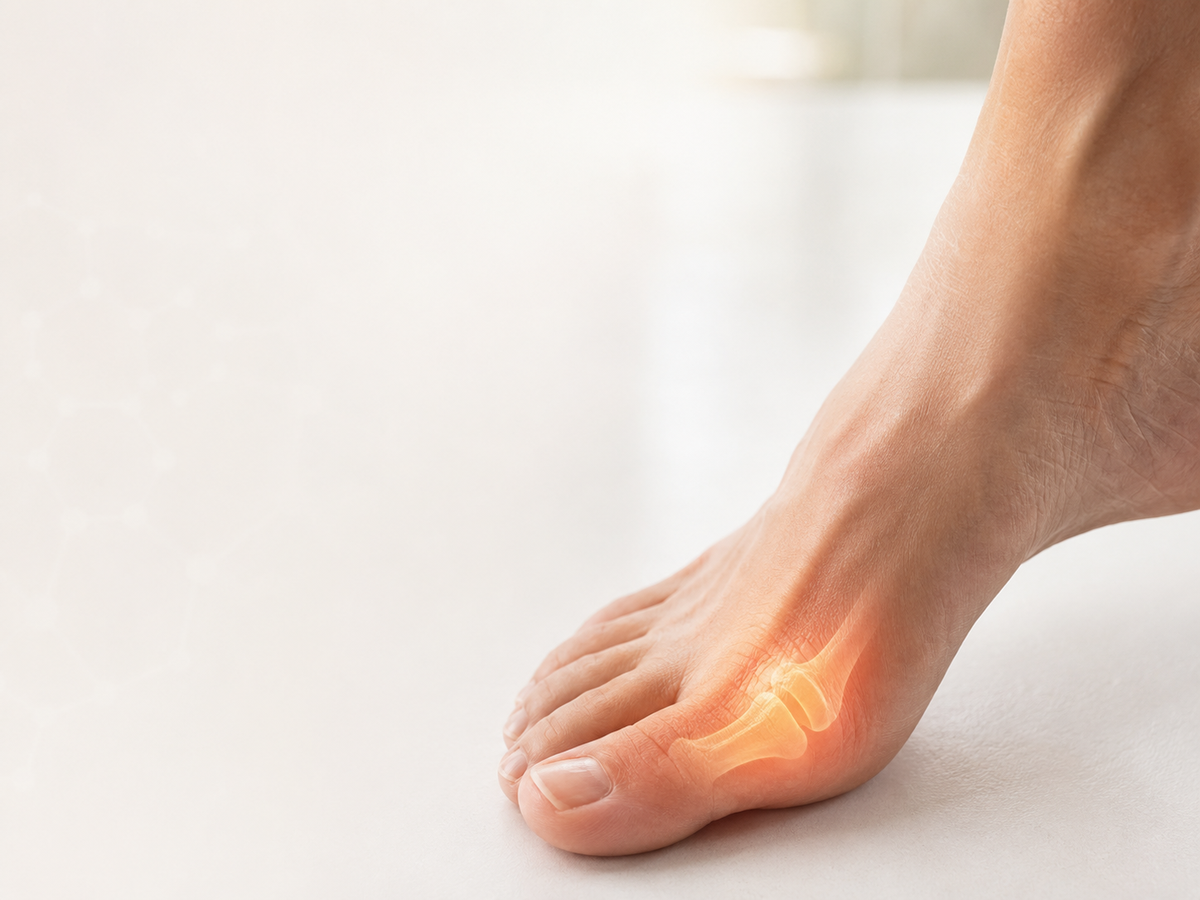
Mechanical offloading wearable designed specifically for the 1st metatarsophalangeal joint — the most common gout site.
Class I Device HSA/FSA Eligible No FDA Clearance Needed
9M+
Americans with gout
0
Existing wearable solutions
95.8M
Projected patients by 2050
4
Provisional patents filed
The Problem

9 million Americans. Zero solutions.

Gout is the fastest growing inflammatory arthritis on the planet. US cases have risen 90.6% since 1990. And yet walk into any pharmacy and you'll find exactly zero products designed for it.

Excruciating pain
Gout flares last 3–10 days and are described as "someone drilling a hole in my big toe." They wake patients from sleep.
Every step hurts
Full bodyweight loads the acutely inflamed joint with every stride. Walking becomes nearly impossible.
Compression sleeves make it worse
The only products on the shelf were designed for other conditions. They compress the exact joint that needs to be decompressed.

"I woke up at 3am unable to put my foot on the floor. I bought a compression sleeve. It made everything worse. So I built the solution that should have existed."

— Shaun Bhagwan, Founder & Gout Patient
How It Works

Offloading. Not compression.

FlareGuard uses a structural bridge and relief channel to transfer body weight away from the inflamed joint — the same principle used in diabetic foot care and post-surgical recovery.

1
Put it on in seconds
Designed to be easy to put on even during an acute flare when every touch matters. The band system positions around the midfoot without compressing the inflamed joint at any point.
2
Load transfers. Not compresses.
A defined low-pressure relief region beneath the 1st MPJ redistributes body weight to the surrounding midfoot and lateral structures with every step — the same offloading principle used in diabetic and post-surgical footwear.
3
Move through your day
Low-profile and consumer-friendly — wearable with or without footwear. No compression. No drugs. A purely mechanical system that significantly reduces direct plantar pressure at the inflamed joint while keeping you mobile.
The Founder

Built by a patient.
For patients.

You take care of yourself. You watch what you eat. You stay active. You do everything right.

Then one night, without warning, you wake up to a pain so intense you cannot put your foot on the floor. Your joint is swollen, burning, screaming at the slightest touch. The doctor says it's gout.

There wasn't a wearable for it. Not for the forefoot. Not something that fits in a shoe. So I built it.

9 million Americans. Decades of suffering. Zero wearable products built for this moment. Until now.

Shaun Bhagwan
Inventor & Founder · Miami, FL
4
Provisional patents filed
IC 010
USPTO trademark filed
FDA
Class I — no clearance required
2026
Target launch
Know Your Risk

Are you at risk for gout?

Answer 10 questions and get your personal risk score plus tailored recommendations — free, no sign-up required.

FlareGuard™ Gout Risk Calculator

10 questions · 2 minutes · Personal risk score

Question 1 of 100%
What is your biological sex?
Male
Female
Female (postmenopausal)
How old are you?
Under 30
30 – 44
45 – 64
65 or older
Which best describes your body weight?
Healthy weight (BMI under 25)
Slightly overweight (BMI 25–29)
Overweight (BMI 30–34)
Obese (BMI 35 or above)
How often do you eat red meat, organ meats, or shellfish?
Rarely or never
Once or twice a week
Several times a week
Daily or almost daily
How much alcohol do you drink, particularly beer or spirits?
None — I don't drink
Occasionally (1–2 drinks a week)
Regularly (3–7 drinks a week)
Heavily (more than 7 drinks a week)
Do you drink sugary sodas regularly?
No — I avoid sugary drinks
Occasionally (a few times a week)
Daily
Does anyone in your immediate family have gout?
No family history
Yes — one family member
Yes — multiple family members
Not sure
Do you take any of these medications?
None of the below
Diuretics or blood pressure medication
Low-dose aspirin daily
Cyclosporine or immunosuppressants
Have you ever had sudden severe big toe pain that woke you at night?
Never
Once or twice
Multiple times — comes and goes
I have been diagnosed with gout
How much water do you drink daily?
I rarely drink plain water
1–2 glasses a day
3–5 glasses a day
6+ glasses — well hydrated
1 of 10

Step forward. Not in pain.

Join thousands of gout patients on the FlareGuard waitlist. Be the first to know when we launch.

Why Compression Sleeves Make Gout Worse (I Learned This the Hard Way at 3am)

It's 3am. Your big toe is in agony. You limp to the pharmacy, scan the foot care aisle with the desperate eyes of someone who would pay literally any amount of money to make this stop. And there it is — a compression sleeve. It says "joint support" right on the box.

You buy it. You put it on. It makes everything worse.

Welcome to gout.

The Sleeve Lied to You (But It's Not Its Fault)

That compression sleeve isn't a bad product. It works great for plantar fasciitis, ankle sprains, and arch support. For those conditions, gentle compression is exactly right.

But gout is not those conditions. Gout is what happens when uric acid crystals — imagine microscopic ninja throwing stars — form inside your joint and your immune system declares full-scale war on them. The result is a joint so inflamed and so angry that even the weight of a bedsheet touching it feels like a personal attack.

Putting a compression sleeve on a gout flare is like trying to fix a house fire with a hair dryer. Not only does it not help — it actively makes things worse by squeezing an already furious joint harder.

What Your Joint Actually Needs

When your 1st metatarsophalangeal joint (the base of your big toe) is in full gout mode, it has one request: please stop putting things on it.

What it needs is called offloading — creating a relief zone so body weight transfers to surrounding structures. The inflamed joint gets a break. Think of it like a pothole in the road. You don't fix it by driving over it harder — you route traffic elsewhere until it's repaired.

What You Should Actually Do During a Flare

  • Elevate it — Get that foot above heart level. Gravity is not your friend right now.
  • Hydrate aggressively — 3–4 liters of water today. Add lemon. Yes it sounds wellness-forward. It works.
  • Ice carefully — Wrap it in a cloth, apply near the joint, not directly on it.
  • Tart cherry extract — 800mg twice daily. Actual clinical backing. Keep it in your cabinet permanently.
  • See a doctor — Gout responds well to NSAIDs, colchicine, or steroids when caught early. Call in the morning.

Why I Built FlareGuard

The first time I had a gout flare I didn't know what it was. I bought the sleeve. I spent two hours increasingly confused about why my $14.99 investment was making things worse. It wasn't until my doctor explained the mechanics that the lightbulb went on.

I went looking for a wearable solution that offloaded the joint instead of compressing it. Something slim enough to fit in a shoe. It didn't exist. So I built it.

FlareGuard™ is the world's first wearable device designed specifically for gout flare management. No compression. No pressure on the joint. Just engineering that was actually designed with gout in mind.

Join the FlareGuard waitlist

Be the first to know when FlareGuard is available.

Woke Up With Sudden Severe Big Toe Pain? Congratulations, You Might Have Gout.

"Congratulations" is probably not the word you were hoping for right now.

You went to bed completely normal. You woke up and your big toe hurts so badly you genuinely considered calling an ambulance — then remembered you'd have to walk to the door to let them in.

Here's the good news: you probably aren't dying. Here's the complicated news: you might have gout — and there's a lot to learn about it fast.

Why Gout Always Strikes at the Most Inconvenient Possible Moment

Gout has excellent timing — if by "excellent" you mean almost always 2am on a Tuesday when you have an important meeting at 8.

There are actual biological reasons. Your body temperature drops while you sleep, and uric acid crystallizes more readily at lower temperatures. Your feet are the coldest parts of your body during sleep. You haven't had water in hours, concentrating uric acid in your blood. And your body's natural anti-inflammatories hit their lowest levels between midnight and dawn — so your immune system's response goes completely unchecked.

How To Tell If It's Gout or Something Else

It's probably gout if: the pain is in your big toe (or ankle, knee, or wrist), you were completely fine when you went to bed, the joint is visibly swollen and red, even light touch is agonizing, you're a man over 30 or a postmenopausal woman, or you've had similar episodes before.

It's probably something else if: the pain came on gradually, there's no swelling or redness, and you recently injured that foot.

What To Do Right Now

  • Call your doctor in the morning — gout responds very well to medication caught early.
  • Elevate the foot immediately — above heart level. Pillows, whatever's available.
  • Drink water. A lot of water — 3–4 liters today. Add lemon.
  • Do NOT put a compression sleeve on it — it will make things worse. Read our article on why.
  • Tart cherry extract — 800mg twice daily. Start today.
  • Rest — if you must walk, the most open footwear you own.

The Long Game

Gout tends to get worse over time without treatment. Flares become more frequent and can involve multiple joints. The good news: gout is one of the most controllable chronic conditions in medicine. Medications like allopurinol combined with dietary changes can dramatically reduce or eliminate flares entirely.

That's why I built FlareGuard™ — the thing I went looking for at 3am and couldn't find. A wearable that offloads the inflamed joint so you can actually function during a flare without making things worse.

Join the FlareGuard waitlist

Be the first to know when FlareGuard is available.

The 5 Supplements That Actually Help With Gout (And 3 That Don't)

Walk into any health food store and you'll find an entire wall of supplements claiming to help with gout. Joint support. Uric acid cleanse. Anti-inflammatory blend. Most of them are marketing dressed up as medicine.

As a gout patient who has tried most of them and a founder who has read the research, here's the honest breakdown — what actually has clinical evidence, what's plausible but unproven, and what's a complete waste of money.

The 5 That Actually Work

1. Tart Cherry Extract

This is the most evidence-backed natural supplement for gout. Multiple clinical studies show tart cherry reduces serum uric acid levels, decreases inflammatory markers, and meaningfully reduces gout flare frequency. The key is the dose — you need a concentrated extract, not tart cherry juice (which is loaded with fructose that actually raises uric acid). Look for a 52:1 concentrate, 800mg twice daily. Toniiq makes the best version currently available. Non-negotiable if you have gout.

2. Quercetin

A flavonoid found in apples, onions, and capers that inhibits xanthine oxidase — the same enzyme that allopurinol blocks. It essentially does what allopurinol does, less powerfully but without the side effects. A 2021 study showed quercetin supplementation significantly reduced serum uric acid in hyperuricemia patients. 500mg twice daily is the standard dose. Look for phytosome-enhanced versions for better absorption.

3. Vitamin C

One of the most underrated gout supplements. A landmark meta-analysis of 13 randomized controlled trials found that vitamin C supplementation significantly reduced serum uric acid — by an average of 0.35 mg/dL. That may not sound dramatic but it's enough to push borderline patients below the crystallization threshold. 500–1,000mg daily. Cheap, safe, well-tolerated. Should be in every gout patient's daily stack.

4. Magnesium Glycinate

Magnesium plays a direct role in uric acid excretion through the kidneys. Low magnesium is associated with higher uric acid levels. Magnesium also reduces inflammation broadly and improves sleep quality — which matters because your worst flares happen while you sleep. 300–400mg of magnesium glycinate at bedtime. Avoid magnesium oxide — it has poor bioavailability and causes digestive issues.

5. Celery Seed Extract

Less studied than the others but has a long history of use in naturopathic gout treatment and some emerging clinical evidence. The active compounds — 3nB (3-n-butylphthalide) — appear to reduce uric acid production and have anti-inflammatory effects. 75mg of celery seed extract standardized to 3nB twice daily. A reasonable addition to a complete gout supplement protocol.

The 3 That Don't

1. Tart Cherry Juice

I know this contradicts everything you've heard. The problem is that commercial tart cherry juice contains significant amounts of fructose — and fructose raises uric acid production. The juice form gives you a fraction of the anthocyanin dose of a concentrated extract while simultaneously raising the very thing you're trying to lower. Get the extract, skip the juice.

2. Apple Cider Vinegar

Extremely popular in gout communities online. Zero clinical evidence for gout specifically. The theory is that it alkalinizes urine — but the amount of ACV you'd need to drink to meaningfully shift urinary pH would be damaging to your teeth and stomach. Lemon water accomplishes the same proposed mechanism much more safely and pleasantly. Save the ACV for salad dressing.

3. Generic "Joint Support" Blends

Glucosamine, chondroitin, MSM — these are the classic joint supplements designed for osteoarthritis. They do nothing for gout because gout is not a structural joint problem. It's a metabolic and inflammatory condition. Spending money on joint support blends for gout is like buying new tires when your engine is broken. Wrong tool, wrong problem.

The Bottom Line

Build your gout supplement stack around these five: tart cherry extract, quercetin, vitamin C, magnesium glycinate, and celery seed. Take them consistently — not just during flares. Combine them with aggressive hydration (3–4 liters of water plus lemon daily) and dietary modification, and you'll see meaningful reduction in flare frequency within 60–90 days.

None of these replace allopurinol if your uric acid is persistently above 8.0 mg/dL. Talk to your doctor. But as a foundation for managing gout naturally, this is the most evidence-backed stack available today.

Join the FlareGuard waitlist

Be the first to know when FlareGuard launches — device, patch, and supplement stack.

The Gout Diet: What Actually Matters vs. What Everyone Gets Wrong

Everyone with gout has been told the same things. No red meat. No shellfish. No alcohol. Eat less purines.

Some of that is right. Some of it is oversimplified to the point of being wrong. And some of the most important dietary factors for gout are almost never mentioned in the standard advice.

Here's what the research actually says — including a few things that will probably surprise you.

What Everyone Gets Wrong: Purines Are Not The Whole Story

The standard gout dietary advice focuses almost entirely on purines — compounds that break down into uric acid. Avoid high-purine foods, the story goes, and your gout will improve.

The problem is that about 80% of the uric acid in your blood comes from your own cells breaking down, not from the food you eat. Dietary purines account for only about 20% of serum uric acid. This means even a perfect low-purine diet can only reduce your uric acid by roughly 15–20% — not enough to bring most gout patients below the crystallization threshold on its own.

This doesn't mean diet doesn't matter. It absolutely does. But the mechanisms that matter most are not always the ones you've been told about.

The Real Villain: Fructose

High-fructose corn syrup — found in most sodas, processed foods, and commercial juices — is one of the most significant dietary drivers of gout, and it's almost never mentioned in standard dietary advice.

Unlike glucose, fructose is metabolized in the liver in a way that directly stimulates uric acid production. It's not about purines at all — it's a completely different biochemical pathway. A 2010 study in the BMJ found that men who drank two or more sugar-sweetened drinks per day had an 85% higher risk of gout compared to those who drank less than one per month.

Cutting soda and processed food with high-fructose corn syrup may do more for your gout than cutting steak.

Beer Is Worse Than Any Food

All alcohol raises uric acid to some degree. But beer is uniquely terrible for gout for two reasons simultaneously. First, beer contains purines from the fermentation process. Second, alcohol in general reduces the kidney's ability to excrete uric acid. Beer does both at once — it raises production AND blocks excretion. If you have gout and you drink beer regularly, this is the single highest-impact dietary change you can make.

Wine, in moderate amounts, has a much smaller effect on gout risk than beer or spirits. If you're going to drink, wine is the least problematic choice — though abstaining entirely during a flare is always the right call.

The Surprise: Dairy Actually Helps

This is the one that surprises most people. Low-fat dairy — milk, yogurt, low-fat cheese — is one of the few dietary factors with consistent evidence for reducing gout risk. The proteins in dairy (casein and lactalbumin) promote uric acid excretion by the kidneys. A large prospective study found that men who consumed the most dairy had a significantly lower risk of gout than those who consumed the least.

You don't need to drink gallons of milk. One to two servings of low-fat dairy daily is enough to get the benefit. Greek yogurt is an easy daily habit that actively works in your favor.

Coffee Is Protective

Another surprise for most patients. Multiple large studies have found that regular coffee consumption is associated with lower serum uric acid levels and reduced gout risk — and the effect appears to be independent of caffeine, since decaf shows similar benefits. The exact mechanism isn't fully understood but likely involves coffee's effect on xanthine oxidase activity.

This doesn't mean coffee cures gout. But if you're a coffee drinker, you don't need to give it up — it's actually working in your favor.

What Actually Matters — The Priority List

Here's how to think about gout diet in order of impact:

  • Highest impact: Eliminate sugary sodas and high-fructose corn syrup. This single change affects the biochemical pathway that drives the majority of uric acid production.
  • High impact: Reduce or eliminate beer. The double-hit of purines plus excretion blockade makes beer uniquely harmful.
  • High impact: Drink 3–4 liters of water daily. Hydration keeps uric acid diluted and supports kidney excretion. Add lemon — citric acid helps alkalinize urine.
  • Moderate impact: Reduce organ meats and shellfish. These are extremely high in purines. Red meat in moderation has less impact than most people think.
  • Protective: Add low-fat dairy daily. One to two servings actively supports uric acid excretion.
  • Protective: Keep drinking your coffee. It's working for you, not against you.
  • Lower impact than assumed: Avoiding all red meat. Lean cuts of red meat in moderation have a relatively modest effect on uric acid compared to fructose and beer.

The Honest Bottom Line

Diet matters for gout — but not always in the ways you've been told. Focus on eliminating fructose and beer before obsessing over every purine count. Add dairy and keep the coffee. Hydrate aggressively every single day.

And remember: for most patients with persistently elevated uric acid, dietary changes alone won't get you to the safe zone below 6.0 mg/dL. That's what allopurinol is for. Diet and medication work together — neither replaces the other.

Join the FlareGuard waitlist

Be the first to know when FlareGuard launches.

EMERGENCY GUIDE

Is This Gout? What To Do Right Now.

If you woke up with sudden severe pain in your big toe and you're Googling from your phone in the dark — you're probably in the right place. Here's what to do in the next 30 minutes.

⚠️ This guide is for informational purposes only and does not constitute medical advice. Always consult a licensed physician or healthcare provider for diagnosis and treatment of any medical condition.
DO THIS RIGHT NOW
1️⃣
Elevate your foot immediatelyGet it above heart level. Stack pillows. Do this now — gravity is making it worse.
2️⃣
Drink water — a lot of it3–4 large glasses right now. Add lemon if you have it. Hydration dilutes uric acid and helps your kidneys flush it out.
3️⃣
Ice it — but carefullyWrap ice in a towel and apply near the joint — not directly on it. 20 minutes on, 20 off. Direct ice on inflamed gout can actually increase pain.
4️⃣
Do NOT put a compression sleeve on itThis is the most common mistake. Compression makes gout significantly worse. The joint needs space and relief — not pressure.
5️⃣
Ask your doctor or pharmacist about pain relief optionsVarious OTC and prescription options exist for gout flare pain. Your doctor or pharmacist can advise on what is appropriate for your specific situation and health history. Call a telehealth line if your doctor isn't available.

Does This Sound Like You?

Check every box that applies. The more you check, the more likely this is gout.

What Is Gout — In Plain English

Gout happens when uric acid — a waste product your body produces naturally — builds up in your blood and forms microscopic razor-sharp crystals inside your joint. Your immune system then declares full-scale war on those crystals, flooding the joint with inflammation. The result is one of the most intense pain experiences in medicine. Doctors have literally described it as one of the worst pains a human can feel.

The good news: gout is one of the most treatable conditions in medicine. With the right medication and lifestyle changes, many people go years without a flare. The key is getting diagnosed and treated quickly.

What To Do In The Next 24 Hours

  • Call your doctor first thing in the morning. Describe your symptoms exactly. Ask about prescription treatment options for acute gout — effective medications are available and work best when started early.
  • Ask for a uric acid blood test. This helps confirm the diagnosis. Your doctor will advise on what your results mean and whether ongoing treatment is recommended.
  • Keep hydrating. 3–4 liters of water today. Add lemon — citric acid helps alkalinize urine and supports uric acid excretion.
  • Rest the joint. The less you load it, the faster it resolves. If you must walk, the most open footwear you own — never compression.
  • Tart cherry extract has been studied for its potential role in supporting healthy uric acid levels. Consult your doctor before starting any new supplement, especially if you are on medication.

How Long Will This Last?

An untreated gout flare typically peaks at 24–48 hours and resolves on its own in 3–10 days. With medication (colchicine or NSAIDs started early) you can cut that significantly. The joint will feel tender and slightly sore for a week or two after the acute pain resolves — that's normal.

Will It Come Back?

Almost certainly yes — if left untreated. Gout is a progressive condition. Without managing uric acid levels, flares become more frequent, last longer, and can involve multiple joints. The first flare is your warning shot. Take it seriously.

That's why we built FlareGuard™ — the first wearable designed specifically to help you stay mobile during a flare and manage your condition long-term.

Seeing a doctor soon?
Download our one-page FlareGuard Doctor Brief to share at your appointment.

Medical Disclaimer: The information on this page is provided for general informational purposes only and does not constitute medical advice, diagnosis, or treatment. FlareGuard™ is not a medical provider. Always seek the advice of a qualified healthcare professional regarding any medical condition or symptoms. Never disregard professional medical advice or delay seeking it because of something you read on this page.

Join the FlareGuard waitlist

Be the first to know when FlareGuard launches. Built for exactly this moment.

FOR YOUR APPOINTMENT

FlareGuard™ Doctor Brief

Share this with your podiatrist or rheumatologist

FlareGuard™
WEARABLE MEDICAL · GOUT FLARE MANAGEMENT
getflareguard.com
Patent Pending · USPTO Trademark Filed

What Is FlareGuard?

FlareGuard™ is the world's first wearable device designed specifically for gout flare management. It uses a mechanical offloading system to reduce direct plantar pressure at the 1st metatarsophalangeal joint during an acute flare — allowing patients to maintain mobility without compressing the inflamed joint. It is a Class I medical device. No FDA clearance is required.

How It Works

A defined low-pressure relief region beneath the 1st MPJ redistributes body weight to surrounding midfoot and lateral structures during gait. This is the same load-redistribution principle used in diabetic footwear and post-surgical offloading devices — applied specifically to acute gout flare management. The device is wearable with or without footwear and requires no compression of the affected joint.

REGULATORY STATUS
Class I Medical Device
No FDA clearance required
HSA/FSA eligible
Prescribable by physicians
MATERIALS
Medical-grade silicone (skin contact)
Neoprene (band/wrap)
TPU (structural elements)
GMP manufactured

Clinical Rationale

Gout flares cause acute monoarticular inflammation with peak pressure sensitivity at the 1st MPJ. Existing consumer solutions (compression sleeves, plantar fasciitis supports) apply compressive forces to the inflamed joint — directly contraindicated during an acute flare. FlareGuard addresses this unmet need by providing non-compressive mechanical offloading, enabling patients to maintain daily mobility and reduce flare-related disability.

How You Can Help Your Patient

1.Recommend FlareGuard as a non-pharmacological adjunct during acute gout flares
2.Write a Letter of Medical Necessity to enable full HSA/FSA reimbursement for your patient
3.Consider joining our Clinical Advisor Network — we are actively seeking podiatrists and rheumatologists to help shape the product and validate its clinical application
Interested in learning more or joining our Clinical Advisor Network?
getflareguard.com · bhagwanshaun@gmail.com
Patent Pending · USPTO Trademark Serial 99747067